Release Life Cycle
This page is designed to provide clarity and transparency regarding the scheduling, nature, and support of our releases, ensuring you have all the information you need to stay updated and manage your deployments effectively. Find an overview of our plans for future enhancements and features here at: owncloud.com/roadmap.
Release Types
ownCloud Infinite Scale is released in two different release types: Production and Rolling. Each of them is targeted to a specific use case and audience group:
|
|
| Type | Production | Rolling |
|---|---|---|
Frequency |
About every 6 months |
Daily |
Audience |
Everyone |
Early adopters and Developers |
Risk |
Low (known) risk |
High (unknown) risk |
Support |
Commercially supported |
Company support on special agreement with ownCloud |
Documentation |
Official |
Moving documentation, engineering output |
Updates |
Patch releases based on last stable |
Daily |
Update path |
Incremental: from previous production to new production, from last rolling before a production release |
From previous rolling to new rolling |
Downgrade |
No |
No |
Service-level agreement (SLA) |
Yes |
No |
Overlapping support |
Yes |
No |
Documentation
-
Production
Will come with released documentation that is specific for the release. It will remain valid throughout the whole lifetime of the release. If patches require documentation changes, addendums will be delivered. -
Rolling
Will have access to the documentation as it moves forward in the development process along with the product which will be available on ownClouds web site. There won’t be specific releases. Changelog entries, PR comments and similar engineering output can complement the information.
Updating and Overlap
-
Production
Provides a guaranteed upgrade path from the last Production release, as well as from the previous Rolling release before the new Production. For that, support from ownCloud is required. Upgrades between two Production releases are only supported to tested patch releases provided by ownCloud. In an upgrade process, all released patch releases have to be installed in the correct sequence. -
Rolling
Does not come with any guaranteed update path. Chances are good that updates will go smooth, but that might have hiccups in cases where the upgrade code is not finalized in time.
Only production gives a reasonable overlap time between releases, for example if version 9 was released, version 8 will still receive a patch release for critical bugs for a reasonable time frame. That time frame will be announced separately and will be aligned with customer needs.
Support
ownCloud only offers commercial support for Production. Rolling might be considered for customer installations in the sales process but always requires an individual agreement between all parties.
Rolling is supported on best effort provided by community and ownCloud staff. There is no SLA and no guarantee for attention.
As ownCloud understands that the effort taken to report a problem is significant and results benefit all users in the community and ownCloud customers, there are resources available to respectfully work on community issues.
Please consider the Contribution guidelines for this.
Versioning Scheme
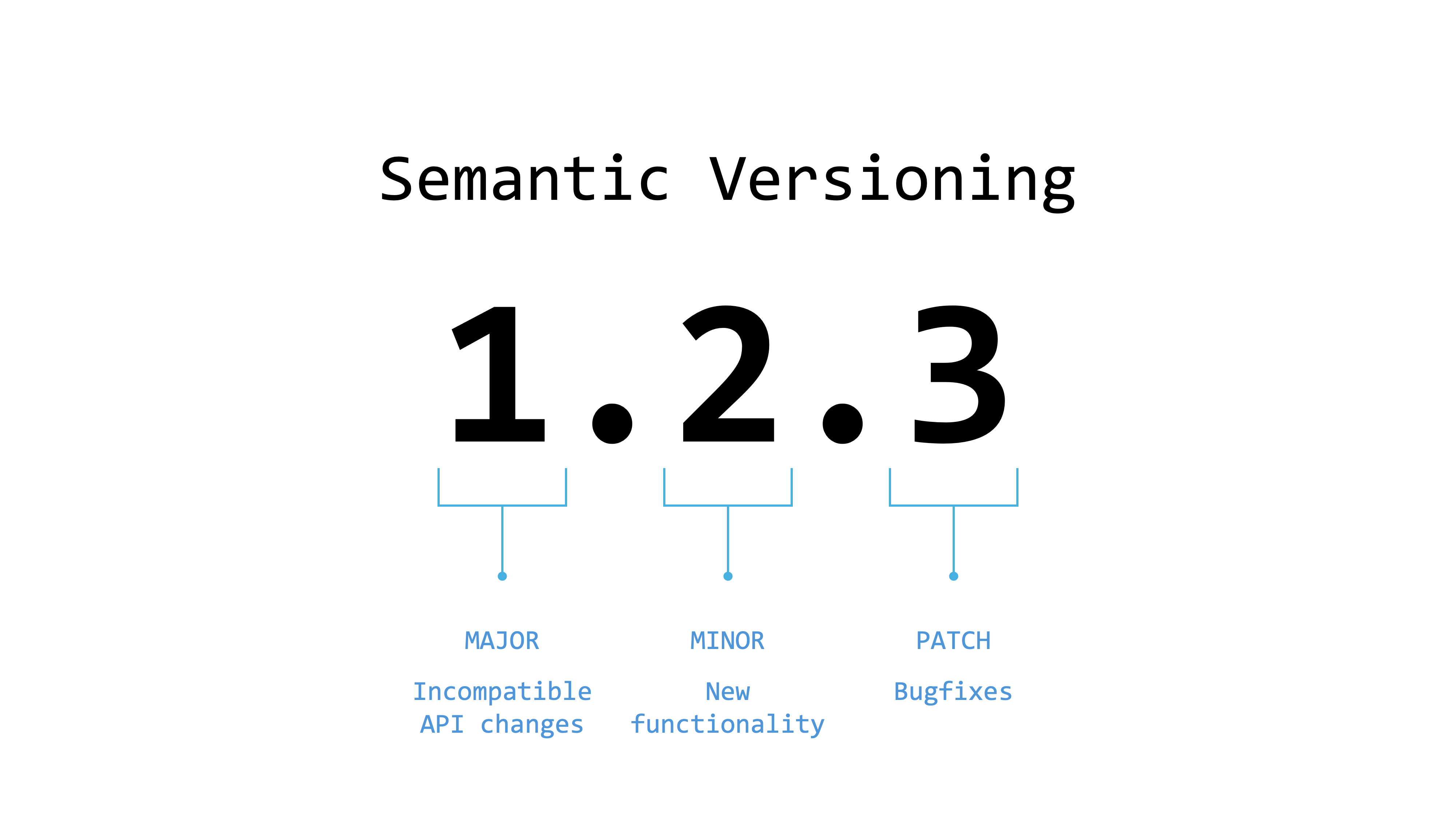
We adhere to Semantic Versioning (SemVer) to ensure clarity and predictability in each of our releases. Learn how Semantic Versioning works on https://semver.org/.
Version Naming
In addition to using SemVer, developers often give upcoming releases descriptive names, such as Daledda or Ebadi. This is particularly important if the SemVer version is likely to change. Breaking changes may necessitate updating the major version rather than just incrementing the minor one. The name is often used to reference the version being developed.